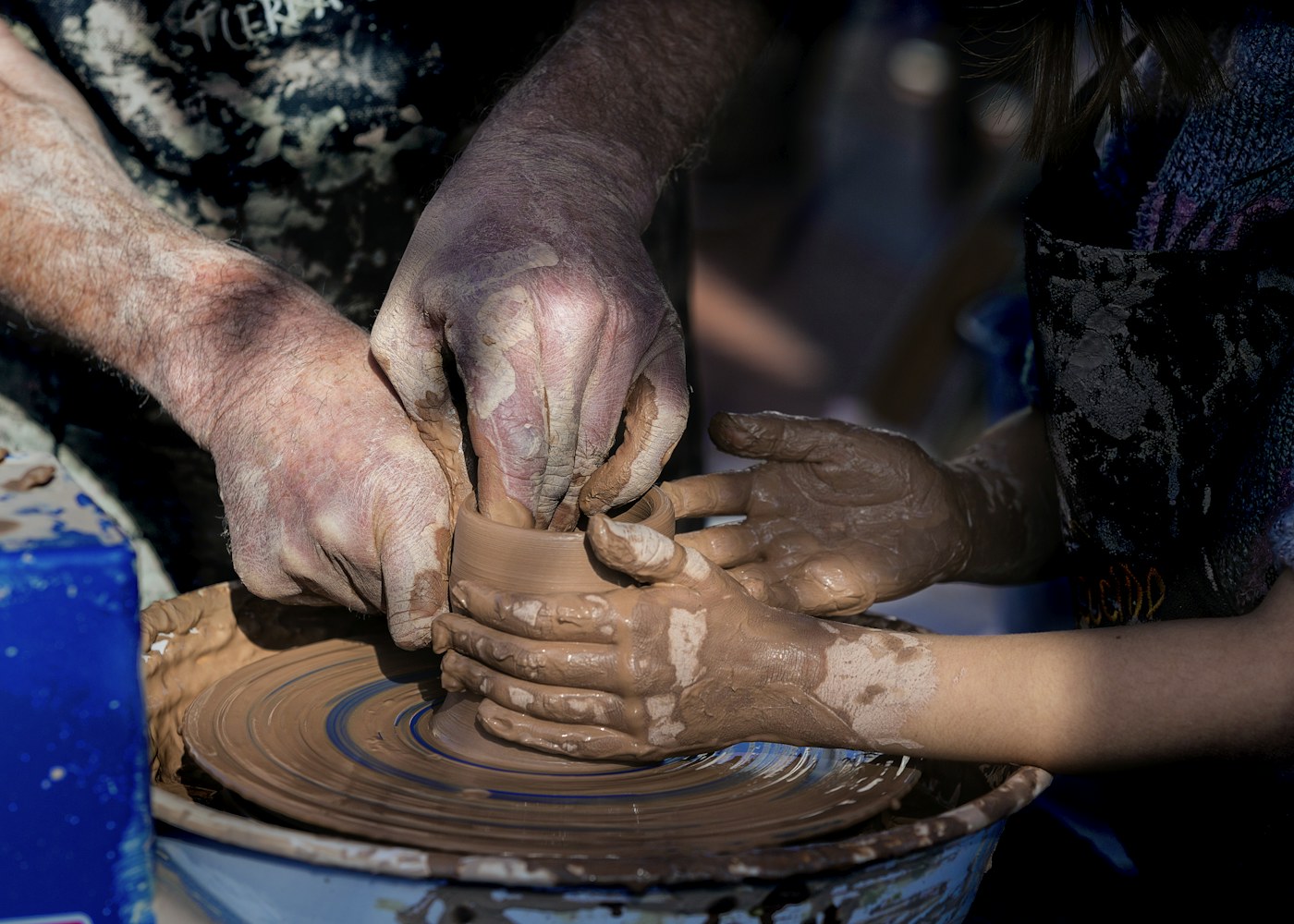
Alexandria clay note
Firing shelf
Drying, glaze choices and collection dates explained before you leave.
Drying, glaze choices and collection dates explained before you leave.
Alexandria humidity affects drying, so collection dates are confirmed after the work has reached the right stage rather than promised from the class table. Pieces stay labelled from the session through bisque firing, glaze and final firing.
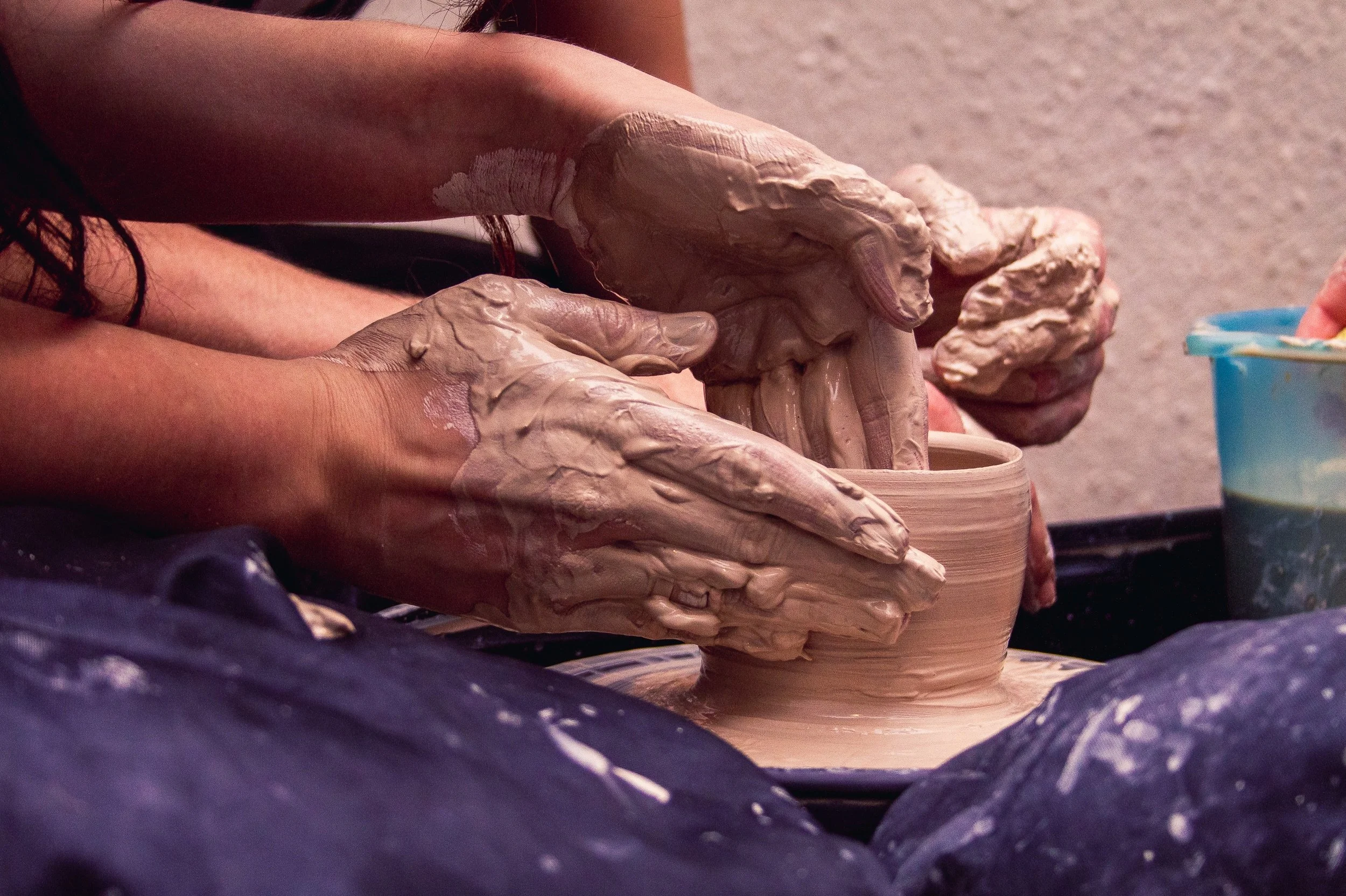
Beginners share tools but keep their own board and clay allowance. The tutor demonstrates briefly, then works around the table so corrections happen while the clay can still respond.
Each maker keeps a labelled board and a workable amount of clay. The tutor moves between places, correcting a hand position or wall thickness while the form can still respond.
Roushdy and Sporting guests receive a clear arrival note; private groups agree their table time, number of makers and collection contact in advance. This keeps the room working like a studio, not an open queue.
At collection we match the piece to its maker reference, point out normal handmade variation and give care notes suited to the finish. A failed piece receives an explanation, not a silent substitute.